







Pool Pump Flow Rate Explained Simply for Homeowners
Introduction to Pool Pump Flow Rate
Understanding pool pump flow rate is one of the easiest ways to ensure the choice of equipment is correct to keep your swimming pool clean, safe, and energy-efficient. While it may sound technical, the idea is actually quite simple once you break it down.
Think of your pool pump as the heart of your pool system. It moves water through the filter, removes dirt and debris, and helps keep the water balanced. If the flow rate is too low or too high, your pool can run into trouble quite quickly.
In South Africa, we use litres, litres per minute, and cubic metres instead of gallons. That way, the numbers match the units you’re more likely to see on local pool equipment, municipal water bills, and installation guides.
For assistance - ask Swemgat on Whatsapp for advice.
What Is Pool Pump Flow Rate?
Simple Definition Anyone Can Understand
Pool pump flow rate refers to how much water your pump moves in a certain amount of time. In South Africa, this is usually measured in litres per minute (L/min) or sometimes cubic metres per hour (m³/h).
👉 Put simply:
It tells you how fast your pool water is being circulated and cleaned.
Why Flow Rate Matters for Pool Health
A proper flow rate helps with:
- Clean, clear water
- Even chemical distribution
- Better filtration
- Lower risk of algae growth
When the flow rate is off, the whole system suffers. Even a good filter and quality chemicals won’t do their job properly if water is not moving through the system at the right speed.
How Pool Pump Flow Rate Works
Litres Per Minute Explained
Litres per minute shows how many litres of water move through the pump every minute.
For example:
- 190 L/min = 190 litres moved per minute
- 300 L/min = faster circulation
Some manufacturers also use m³/h:
- 1 m³ = 1000 litres
- 190 L/min = 11.4 m³/h
- 300 L/min = 18 m³/h
That means you may see the same pump rated in either format, depending on the brand.
Turnover Rate Basics
Turnover rate is the amount of time it takes for your pump to circulate the full volume of your pool once.
👉 A common target turnover time for your private pool at home is 6 to 8 hours.
This does not mean every drop of water is changed instantly, but it is a useful guide for sizing and running your pool pump correctly.
Key Factors That Affect Pool Pump Flow Rate
Pool Size and Volume
The larger the pool, the more water must be circulated. A small splash pool and a large family pool won’t need the same flow rate.
In South Africa, pool volume is usually measured in:
- Litres
- Cubic metres (m³)
For example:
- 40000 litres = 40 m³
- 60000 litres = 60 m³
Pipe Size and Length
Long pipes or narrow pipes create resistance. The more resistance in the plumbing, the harder the pump must work and the lower the actual flow rate may become.
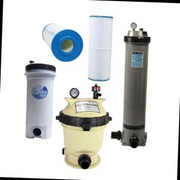
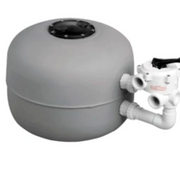
Filter Type and Condition
Your filter also affects flow:
- A dirty filter slows water down
- A clean filter improves circulation
- An undersized filter can restrict performance
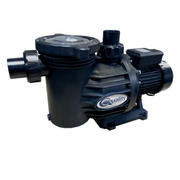
Pump Power and Efficiency
A more powerful pump can move more water, but power alone is not everything. An efficient pump that matches your pool system will usually perform better than an oversized one.
Ideal Pool Pump Flow Rate for Homeowners
Recommended Flow Rate Standards
A useful range for many residential pools is about:
- 150 to 300 L/min
- Or roughly 9 to 18 m³/h
The exact number depends on your pool size, plumbing layout, filter, and how quickly you want to achieve turnover.
Calculating Your Pool’s Flow Rate
Here’s a simple formula:
Pool Volume ÷ Turnover Time = Required Flow Rate
Example:
- Pool volume = 90000 litres
- Desired turnover time = 8 hours
First convert hours to minutes:
8 hours = 480 minutes
Then calculate:
90,000 ÷ 480 = 187.5 L/min
👉 So your required flow rate is about 188 L/min
That is also about 11.25 m³/h
This simple formula gives homeowners a solid starting point when choosing the right pump.
Signs Your Pool Pump Flow Rate Is Too Low or Too High
Low Flow Rate Symptoms
When the flow rate is too low, you may notice:
- Cloudy water
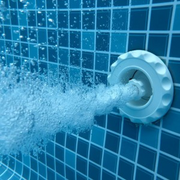
- Weak return jets
- Debris staying in the pool
- Poor chemical mixing
- Algae appearing more often
Low flow can make your pool feel like it is always one step behind, no matter how often you clean it.
High Flow Rate Problems
Too much flow can also cause trouble:
- High pressure in the filter system
- Extra wear on pipes and fittings
- Noisy operation
- Poor filter performance in some systems
- Wasted electricity
Bigger is not always better. A pump that is too strong for the system can cost more to run and shorten equipment life.
How to Measure Pool Pump Flow Rate
Using a Flow Meter
The most accurate method is to install a flow meter on the plumbing line. This shows exactly how much water is moving through the system.
These readings are usually shown in:
- L/min
- m³/h
DIY Estimation Method
If you do not have a flow meter, you can still estimate the flow rate by:
- Checking the pump’s rated output
- Looking at the filter’s specifications
- Calculating your pool’s turnover needs
- Watching the strength of the return jets
This method is less exact, but it can still help you spot whether your system is in the right ballpark.
Tips to Optimize Pool Pump Flow Rate
Maintenance Tips
To keep your flow rate healthy:
- Clean the filter regularly
- Empty the pump basket
- Clear out skimmer baskets
- Check for leaks
- Make sure valves are open correctly
- Remove blockages from the suction line
Small maintenance steps can make a surprisingly big difference.
Upgrading to Variable-Speed Pumps
Variable-speed pumps are a smart option for many homeowners because they let you adjust the flow rate based on what your pool needs.
Benefits include:
- Better control of water flow
- Lower electricity use
- Quieter operation
- Longer equipment life
For South African homeowners dealing with rising electricity costs, this can be a very worthwhile upgrade.
Common Mistakes Homeowners Make
Oversizing or Undersizing Pumps
A pump that is too small may struggle to circulate water properly. A pump that is too large may create too much pressure and use more electricity than necessary.
The goal is to choose a pump that matches:
- Pool volume
- Pipe size
- Filter capacity
- Required turnover time
Ignoring System Resistance
Many homeowners focus only on the pump itself and forget the rest of the system. Pipes, bends, valves, chlorinators, and filters all affect how much water can actually flow.
That is why the pump’s label rating is not always the same as the real-life flow rate in your pool.
Tip: When reading a pump performance curve (like the graph below), assuming a pump head of 10 meter for the average pool is suggested.
FAQs
1. What is a good pool pump flow rate in metric units?
For many home pools, a flow rate of around 150 to 300 L/min is a reasonable range, depending on the pool size and system design.
2. What does m³/h mean on a pool pump?
It means cubic metres per hour. One cubic metre equals 1,000 litres.
3. How do I know my pool’s required flow rate?
Divide your pool volume in litres by the number of minutes in your desired turnover time.
4. Can low flow rate make pool water cloudy?
Yes. Poor flow means weak circulation and weaker filtration, which often leads to cloudy water.
5. Is a higher flow rate always better?
No. Too much flow can damage equipment, increase pressure, and waste electricity.
6. Should I use litres or cubic metres when calculating pool volume?
Either works. Just stay consistent. Many South Africans use litres for everyday understanding and m³ for equipment specs.
Conclusion
Now you’ve got pool pump flow rate explained simply for homeowners in metric terms that make sense in South Africa. Once you understand flow rate, it becomes much easier to choose the right pump, run it efficiently, and keep your pool in top shape.
The key is simple: know your pool volume, aim for a sensible turnover time, and make sure your pump, filter, and plumbing all work together. Do that, and your pool will be cleaner, easier to manage, and cheaper to run.
For assistance - ask Swemgat on Whatsapp for advice.