






Chlorine Lock in a Fibreglass Pool: How to Reduce Cyanuric Acid Without Damaging Your Pool
We recently received a good question from Mr. PF from Bryanston, Johannesburg:
“I have a problem with chlorine lock. I know the best solution is a water change but was wondering if there is any other way to get rid of or reduce the cyanuric acid? My pool is fibreglass.”
This is a common problem in South African swimming pools, especially where chlorine tablets, floaters, or stabilised chlorine products have been used for a long time.
The honest answer is this: if your cyanuric acid level is too high, the most reliable way to reduce it is dilution — removing some pool water and replacing it with fresh water. There are products and methods that claim to reduce cyanuric acid, but in real-world pool care, partial water replacement remains the most dependable and cost-effective solution. Industry guidance commonly places the ideal cyanuric acid range around 30–50 ppm for residential outdoor pools. Higher levels reduce chlorine effectiveness and may require much higher free chlorine levels to sanitise properly.
What Is Cyanuric Acid?
Cyanuric acid, also called CYA, pool stabiliser, or conditioner, protects chlorine from being destroyed too quickly by sunlight.
In sunny areas like Johannesburg, this is useful. Without stabiliser, chlorine can disappear very quickly under strong UV exposure.
The problem starts when the stabiliser level climbs too high.
Cyanuric acid does not evaporate like water. Every time you use certain stabilised chlorine products, more CYA can be added to the pool. Over time, the level can build up quietly until the chlorine no longer works properly.
What Is Chlorine Lock?
“Chlorine lock” is the term many pool owners use when the pool has chlorine present, but the water still turns cloudy, green, or difficult to sanitise.
In many cases, the real issue is too much cyanuric acid. The chlorine is still in the water, but it becomes less active and less effective. This means the pool may test as having chlorine, yet algae and bacteria control becomes poor.
Typical signs include:
- The pool keeps turning green even after adding chlorine.
- Chlorine readings seem present, but the water does not clear.
- You need more and more chlorine to get the same result.
- Algae returns quickly.
- The water looks dull, cloudy, or flat.
- Shock treatments do not work as expected.
What Causes High Cyanuric Acid?
The most common cause is long-term use of stabilised chlorine, especially:
- Chlorine tablets
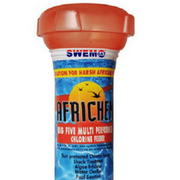
- Floating chlorine dispensers
- Trichlor products
- Dichlor granular chlorine
- Some “multi-action” chlorine products
These products can be convenient, but many of them add both chlorine and cyanuric acid. The chlorine gets used up, but the cyanuric acid stays behind.
That is why a pool can slowly become overstabilised, especially if the same water has been in the pool for a long time.
Can You Reduce Cyanuric Acid Without Draining the Pool?
There are only a few possible options, and homeowners need to be realistic.
1. Partial drain and refill — the most reliable method
This is the most practical solution.
For example:
| Water Replaced | Approximate CYA Reduction |
|---|---|
| 25% of pool water | About 25% reduction |
| 33% of pool water | About 33% reduction |
| 50% of pool water | About 50% reduction |
So, if your CYA is 100 ppm and you replace 50% of the water, the new level should be roughly 50 ppm, assuming your fill water contains no CYA.
This is why a partial water change works: it physically removes the cyanuric acid from the pool.
You usually do not need to empty the whole pool. In fact, with a fibreglass pool, you should be careful with full draining.
Important Warning for Fibreglass Pool Owners
Because Mr. PF’s pool is fibreglass, this point is important:
Do not completely empty a fibreglass pool without professional advice.
Fibreglass pools can be affected by ground pressure and groundwater. In some cases, an empty pool can shift, lift, or become structurally stressed. This risk is higher after heavy rain or where the water table is high.
A safer homeowner approach is usually:
- Drain only a portion of the water.
- Refill with fresh water.
- Circulate the pool.
- Retest the cyanuric acid level.
- Repeat if necessary.
Rather do two smaller water changes than one risky full drain.
2. Reverse Osmosis Pool Filtration
Reverse osmosis can remove cyanuric acid without draining the pool, but it requires specialised mobile filtration equipment. It is more common in some overseas markets and is not always easily available or cost-effective for normal residential pools. Reverse osmosis is recognised as an effective option, but draining and dilution is usually the more economical route.
For most South African homeowners, partial dilution is still the practical answer.
3. Cyanuric Acid Reducer Products
Some products claim to reduce CYA using enzymes or other chemistry. Results can be inconsistent, especially when CYA levels are very high, water conditions are poor, or the pool has other balance problems.
They may help in some cases, but they should not be treated as a guaranteed fix.
If the CYA level is seriously high, the pool owner may spend more money trying to avoid a water change than the actual water replacement would cost.
Swemgat do not stock any CYA reducer products.
What CYA Level Should You Aim For?
For most outdoor residential pools, a practical target is:
| Cyanuric Acid Level | Meaning |
|---|---|
| 0–20 ppm | Too low for sunny outdoor pools |
| 30–50 ppm | Good target range |
| 60–80 ppm | Manageable, but chlorine demand increases |
| 100 ppm+ | Too high; chlorine becomes less effective |
| 150 ppm+ | Strongly consider partial water replacement |
For a normal fibreglass pool in Johannesburg, 30–50 ppm is a sensible range.
Step-by-Step Fix for Chlorine Lock
Step 1: Test the water properly
Before treating the pool, test:
- Free chlorine
- Combined chlorine
- pH
- Total alkalinity
- Cyanuric acid
- Calcium hardness, if relevant
- Phosphates, if algae keeps returning
Do not guess. CYA problems must be measured.
Step 2: Stop adding more stabilised chlorine
If CYA is already high, avoid adding more products that contain stabiliser.
Temporarily avoid:
- Chlorine pills/tablets
- Stabilised granular chlorine
- Multi-action floaters that contain stabiliser
Use an unstabilised chlorine option while correcting the problem.
Step 3: Partially drain and refill
Work out how much water needs to be replaced.
Example:
If your CYA is 100 ppm and your target is 50 ppm, you need to replace about 50% of the water.
If your CYA is 80 ppm and your target is 40 ppm, you also need about a 50% dilution.
For fibreglass pools, do this carefully and avoid draining too much at once.
Step 4: Circulate and retest
After refilling:
- Run the pool pump long enough to mix the water properly.
- Retest the cyanuric acid.
- Retest pH and alkalinity.
- Adjust water balance before heavy chlorination.
Step 5: Shock the pool correctly
Once CYA is back under control, shock the pool if needed using Africhem Granular Chlorine.
But remember: shocking a pool with very high CYA is often frustrating because the chlorine is less effective. Fixing the CYA first makes the shock treatment work better.

How to Prevent Chlorine Lock from Coming Back
Once the pool is corrected, the key is prevention.
Use chlorine tablets carefully
Chlorine tablets are convenient, but they should not be the only chlorine source forever. If used continuously, they can push stabiliser too high.
Test CYA regularly
Most homeowners test chlorine and pH often, but forget stabiliser.
Test cyanuric acid at least:
- At the start of the swimming season
- After prolonged algae problems
- Before adding more stabiliser
- If chlorine seems ineffective
Avoid adding stabiliser unless you need it
Many pools already have enough CYA. Do not add stabiliser blindly. 
Keep pH in range
High pH also reduces chlorine performance. Even if CYA is correct, poor pH control can still make chlorine less effective.
Aim for a pH of around 7.2–7.6.
Direct Answer to Mr. PF
For your fibreglass pool in Bryanston: yes, there are a few possible alternatives, but the most dependable way to reduce cyanuric acid is still partial water replacement.
You do not necessarily need to do a full water change. A safer approach is to do a controlled partial drain and refill, retest, and repeat if needed.
Because the pool is fibreglass, avoid fully emptying the pool unless a professional has assessed the site conditions. Rather reduce the level gradually and safely.
Final Advice
Chlorine lock is usually not solved by adding more and more chlorine. That often makes the problem more expensive.
The correct approach is:
- Test the cyanuric acid level.
- Stop adding stabilised chlorine.
- Dilute the water if CYA is high.
- Rebalance the pool.
- Follow the chlorine programme for high CYA-pools
Winter programme & Programme for a high-CYA pools
During winter, chlorine demand is lower because:
- The water is colder
- There is less swimming
- Algae growth is slower
- Sunlight is weaker
- The pool is often covered or used less
For this reason, winter is the ideal time to move away from stabilised chlorine and maintain the pool with Hypochlor Non-Stabilised Chlorine Pills. Use a pill


.