









How to Balance Pool Water: Free Chlorine, Total Chlorine, pH and Alkalinity Explained
Balanced pool water is what keeps a swimming pool clear, comfortable and safe to swim in. When the chemistry is off, pool water can turn cloudy, irritate eyes and skin, damage equipment, stain surfaces, or allow algae to take over.
The problem is that many pool owners test the water, see numbers like free chlorine, total chlorine, pH and alkalinity, and do not know what those numbers actually mean or what to fix first.
Here is the practical explanation.
Why pool water balance matters
Pool chemicals do not work properly unless the water is balanced. You can add chlorine, shock, algaecide or clarifier, but if the pH or alkalinity is wrong, the results are often poor.
Good water balance helps with:
- Better sanitising
- Clearer water
- Less eye and skin irritation
- Lower chemical waste
- Longer life for pumps, chlorinators, liners and pool surfaces
1. Free Chlorine explained
Free Chlorine is the chlorine in the water that is still available to sanitise the pool. It is the useful chlorine that kills bacteria, breaks down contaminants and helps keep the water safe.
This is the chlorine level most pool owners should focus on day to day.
Ideal free chlorine range
For most residential pools, aim for:
1 to 3 ppm
Some pool owners prefer to run a little higher in hot weather or during heavy pool use, but going too low is where trouble starts.
If free chlorine is too low
You may get:
- Green water
- Algae growth
- Poor sanitising
- Strong chlorine smell caused by chloramines, not clean chlorine
If free chlorine is too high
You may get:
- Eye and skin irritation
- Faster chlorine loss in sunlight
- Bleaching of pool covers or surroundings if extreme
2. Total Chlorine explained
Total Chlorine is the combined amount of:
- Free Chlorine
- Combined Chlorine
So total chlorine is not just the good chlorine. It includes chlorine that has already reacted with contaminants.
What is Combined Chlorine?
Combined chlorine is chlorine that has already attached itself to contaminants like sweat, body oils, urine, sunscreen and organic waste. It is much less effective as a sanitiser and is usually what causes the harsh chlorine smell people complain about.
Simple formula
Total Chlorine = Free Chlorine + Combined Chlorine
If your total chlorine is much higher than your free chlorine, that usually means you have too much used-up chlorine in the water.
Example
- Free Chlorine = 1 ppm
- Total Chlorine = 3 ppm
Then:
Combined Chlorine = 2 ppm
That is too high and the pool likely needs a chlorine shock treatment - i.e. Add 3 to 6 times the normal dose of granular chlorine to get rid of contaminants.
3. pH explained
pH measures how acidic or alkaline the pool water is. It affects swimmer comfort, chlorine efficiency and the condition of pool surfaces and equipment.
Ideal pH range
Aim for:
7.2 to 7.6
This is the sweet spot for most swimming pools.
If pH is too low
Low pH means the water is too acidic. That can cause:
- Eye irritation
- Corrosion of metal parts
- Damage to pumps, chlorinators and heat exchangers
- Etching of plaster or cement finishes
If pH is too high
High pH means the water is too alkaline. That can cause:
- Cloudy water
- Scaling on surfaces and equipment
- Reduced chlorine effectiveness
- Rough deposits on pool walls and inside pipes
Why pH matters so much
Even if chlorine levels look fine, high pH can make chlorine far less effective. That means the pool may still go green even though chlorine is present.
4. Total Alkalinity explained
Total Alkalinity acts like a buffer for pH. It helps stop the pH from swinging up and down too quickly.
Think of alkalinity as the stabiliser behind the pH.
Ideal total alkalinity range
For most home pools, aim for:
80 to 120 ppm
If alkalinity is too low
You may get:
- Unstable pH
- Sudden pH changes
- Acidic water
- Corrosion risk
If alkalinity is too high
You may get:
- Constant high pH
- Cloudy water
- Scale build-up
- Difficulty lowering pH
How these readings work together
Pool chemistry should not be looked at one number at a time. These values affect each other.
Here is the simple order of importance:
Step 1: Fix total alkalinity first
If alkalinity is wrong, pH becomes hard to control.
Step 2: Adjust pH
Once alkalinity is in range, set the pH correctly.
Step 3: Adjust chlorine
After the water is balanced, chlorine can work properly.
That is why adding more chlorine to a badly balanced pool often does not solve the problem.
Easy target ranges for most swimming pools
- Free Chlorine: 1 to 3 ppm
- Total Chlorine: Close to free chlorine
- Combined Chlorine: Ideally less than 0.2 ppm
- pH: 7.2 to 7.6
- Total Alkalinity: 80 to 120 ppm
What to do when readings are off
Free Chlorine is low
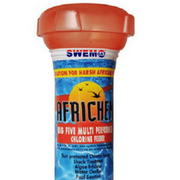
Add chlorine or run your chlorinator longer or adjust the opening of the chlorine floater. Check pH too, because high pH can make chlorine weak.
Buy chlorine floaters here!
Total Chlorine is high compared to Free Chlorine
Shock the pool to break down combined chlorine and restore sanitising power.
Buy granular chlorine!
pH is too low
Add a pH increaser.
Buy now!
pH is too high
Add a pH reducer or acid carefully according to product directions.
Buy pool acid
Alkalinity is too low
Add an alkalinity increaser.
Buy here!
Alkalinity is too high
Use acid carefully in controlled doses and retest until the level comes down.
Common mistake pool owners make
One of the biggest mistakes is trying to fix cloudy or green water by adding more and more chlorine without first checking pH and alkalinity.
If the pH is too high, chlorine does not perform properly. If alkalinity is unstable, the pH keeps drifting. That means the real problem never gets solved.
Simple testing routine for pool owners
In summer, test the pool at least 2 to 3 times per week. In winter, weekly testing is often enough for many pools.
Check regularly:
- Free Chlorine
- Total Chlorine
- pH
- Total Alkalinity
If the pool has heavy swimmer use, rain, very hot weather or visible water problems, test more often.
Buy your pool test kit now!
Final word
A clear pool starts with understanding the basics. Free chlorine is the working sanitizer. Total chlorine shows the overall chlorine level. pH affects comfort and chlorine efficiency. Alkalinity keeps pH stable.
Get those four right and pool care becomes easier, cheaper and more predictable.